



Power steering warning signs and what they mean
A steering wheel that suddenly feels heavier than usual is often the first sign of a developing problem with the power steering system. The driver may also notice a groaning noise, fluid on the pavement, a warning message, or a wheel that seems slower to return to center. Those symptoms can point to different faults, so replacing parts based only on the steering feel is a costly way to solve the wrong problem.
This guide focuses on troubleshooting power steering complaints in passenger cars and light trucks. It explains how to recognize common symptoms, compare hydraulic and electric systems, inspect fluid safely, identify likely causes, and decide when a vehicle should be driven to a repair shop. The goal is to help the reader narrow the diagnosis without pretending that every warning sign identifies one failed component.
The most common reasons for trouble include low or contaminated fluid, a leak, an air restriction, a failing pump, a worn steering rack or gearbox, or an electrical fault in an electric-assist model. A disconnected battery can also disable some electric systems until the steering system’s control module wakes up or the vehicle is driven. Because several of these conditions affect handling, a sudden change deserves attention rather than casual monitoring.
- New or recently noticeable stiffness in the steering wheel
- Groaning, whining, bubbling, or knocking while turning
- Red, amber, or yellow fluid beneath the vehicle
- A steering warning message on the instrument cluster
- Fluid spraying, foaming, or leaking near the reservoir
- A wheel that no longer centers naturally after a turn
How hydraulic and electric power steering differ
Power steering reduces the force needed to turn the wheels by adding controlled assistance. The original mechanical connection between the steering wheel and steering gear remains part of many hydraulic systems, so the vehicle may still be steerable if assistance fails. The wheel simply becomes much heavier. Electric-assist systems replace hydraulic pressure with an electric motor and electronic control system, so the failure experience can be different.
| Feature | Hydraulic assistance | Electric assistance |
|---|---|---|
| Primary power source | Engine-driven hydraulic pump | Electric motor |
| Typical fluid service | Reservoir level, condition, and possible flush | No steering fluid to check |
| Common electrical checks | Usually limited, though some systems use electronics | Fuses, connectors, battery condition, and control-module communication |
| Effect of complete assist loss | Heavy steering, but a mechanical path may remain | May vary by vehicle; some systems disable assist entirely |
| Leak location to inspect | Reservoir, hoses, pump, rack, and fittings | Usually no hydraulic leak; check for unrelated coolant or battery-area fluid |
Many modern vehicles use electric power steering because the electric motor can vary assistance according to speed and other operating conditions. A traditional hydraulic system may also use a speed-sensitive control valve, so neither system should be described simply as “always heavy” or “always light.” The owner’s manual remains the best source for the exact design fitted to a particular vehicle.
Hybrid or electro-hydraulic systems add another layer. They still use hydraulic fluid, but an electric motor runs the pump instead of an engine-driven belt. A quiet engine does not necessarily mean the system has no pump. Checking the vehicle’s specification can prevent a mechanic from looking for the wrong drive arrangement.
Diagnose power steering problems by symptom
A useful diagnosis starts with what the driver experiences and when it happens. A noise only at full lock, a fluid stain on a dry driveway, and a wheel that pulls to one side do not point to the same repair. Before opening the hood, note the vehicle’s speed, whether the engine was running, how far the wheel was turned, and whether the problem appeared suddenly.
| Observed symptom | Likely areas to investigate | Useful first checks |
|---|---|---|
| Heavy steering when stopped or at parking speed | Low fluid, air in the system, pump or rack wear, or an electrical fault | Check for leaks, fluid condition, warning messages, battery condition, and available assist |
| Groaning when turning | Low fluid, air, cavitation, restriction, or pump wear | Inspect the reservoir and hoses with the engine running and the wheel turned only as directed |
| Whining that changes with steering input | Fluid aeration, pump wear, or a restriction | Listen for a repeatable relationship between sound, steering angle, and engine speed |
| Knocking or clunking | Loose mounting, worn joint, rack, tie rod, or steering component | Check whether the sound follows road bumps, steering movement, or engine vibration |
| Fluid on the ground | Reservoir, hose, fitting, pump, rack, or pinion seal | Locate the source and identify the fluid before adding anything |
| Warning message | System self-diagnostic, electrical supply, sensor, motor, or hydraulic fault | Record the exact message and have the vehicle codes checked before replacing parts |
| Steering wheel off center | Alignment, worn linkage, uneven tire wear, or differing assist behavior | Compare wheel position on level ground and inspect tire condition |
| Assist works only after driving for a while | Control module initialization or electrical communication issue | Check battery condition, charging system, fuses, and module communication |
Try to reproduce the complaint safely rather than forcing the wheel. Turn the wheel only partway in each direction while the vehicle is stationary, and avoid holding it near full lock for long periods. Some hydraulic systems can heat their fluid during prolonged steering at low speed, which changes fluid behavior and may make a temporary symptom disappear after the vehicle warms up.
Road testing can help separate steering assist issues from unrelated vibration or braking problems. A vehicle that pulls during braking may have a brake or suspension concern rather than a failed steering rack. A vibration felt through the wheel may come from tires, wheel balance, alignment, or drivetrain components. Recording what the driver can see, hear, and feel is more useful than using broad labels such as “bad steering.”
Inspecting hydraulic power steering fluid and leaks
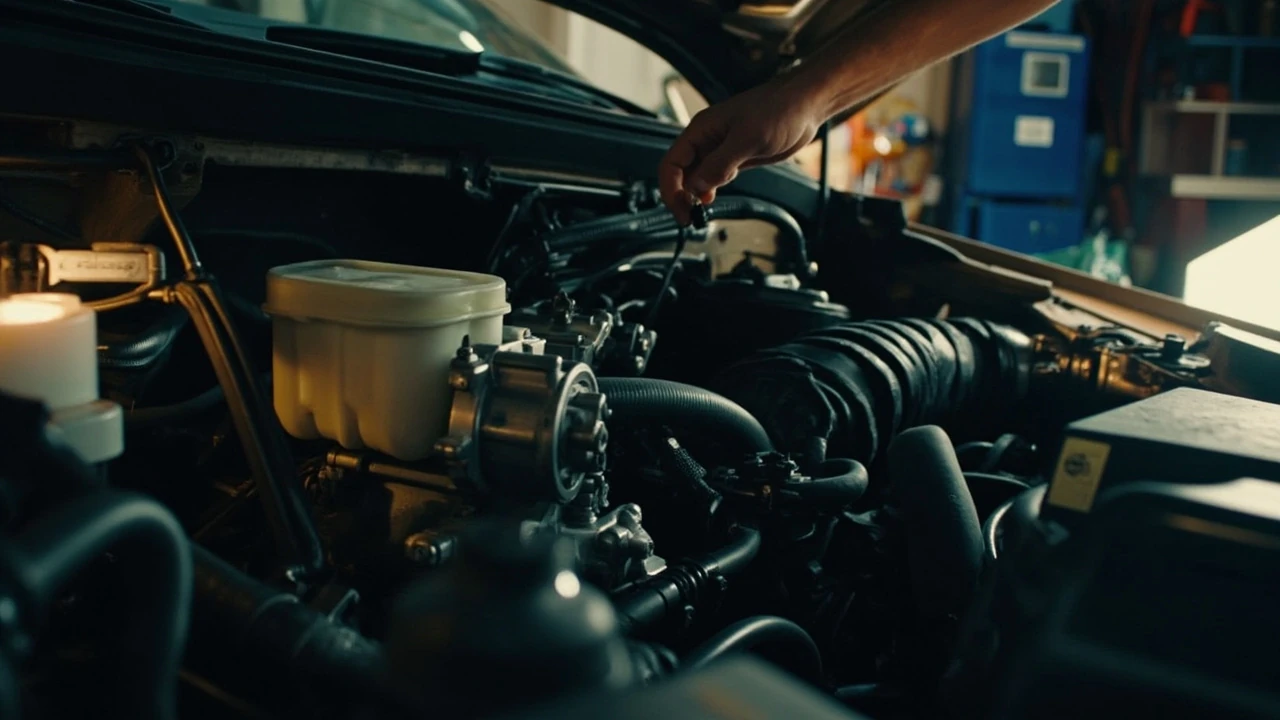
Fluid inspection is appropriate only for a vehicle with a hydraulic or electro-hydraulic steering system. The reservoir is commonly near the engine bay, but its location and required fluid vary. The owner’s manual should identify the correct reservoir, fluid specification, level procedure, and any warning about checking a hot system. In many vehicles, the level is read with the engine off and the fluid cold; some makers specify a different procedure.
Never identify fluid by color alone. Power steering fluid can be clear, red, amber, or dark, depending on the formulation and contamination. Consult the vehicle’s fluid specification before adding product. Automatic transmission fluid is not a universal substitute, even though some hydraulic systems use closely related fluids.
- Park on level ground, set the parking brake, and follow the manual’s engine-temperature instructions.
- Locate the power steering reservoir and inspect the fluid level against the marked range.
- Look beneath and behind the reservoir for dark wet patches, residue, or fresh fluid.
- Examine accessible hoses and fittings for cracking, looseness, bulging, or wetness.
- With the fluid cold, remove the cap and check for a burnt odor, milky appearance, foam, glitter, or visible debris.
- Recheck the level after the specified settling period before deciding whether fluid loss requires service.
A small leak can make the fluid level fall gradually, while a fitting or hose rupture can empty the system quickly. If the reservoir is empty, adding fluid may temporarily restore operation, but it does not correct the leak. Air may enter an emptied system, producing noise or unstable assistance. If fluid is low, inspect for the cause before topping it off.
| Fluid observation | Possible meaning | Recommended response |
|---|---|---|
| Level below the minimum mark | Leak, seepage, or prior loss | Locate the leak and repair it before relying on added fluid |
| Clear and clean, with correct level | Normal condition may still exist elsewhere | Continue diagnosing by symptom, noise, and electrical checks |
| Milky or opaque | Possible water contamination or incorrect fluid mixing | Avoid driving until the cause and fluid condition are evaluated |
| Foamy after filling | Air in the hydraulic system or incompatible fluid | Have the system checked for leaks and contamination |
| Dark with a burnt odor | Degraded or overheated fluid | Determine why the system overheated before replacing fluid alone |
| Visible metallic particles | Internal wear | Seek a complete diagnosis because the pump or steering gear may be damaged |
If the steering system shares fluid with another circuit, the owner’s manual is especially important. The procedure for bleeding air, checking pressure, or replacing fluid may differ substantially. Blindly bleeding a system can leave air trapped, while adding fluid to the wrong reservoir can create a new problem.
What causes knocking, groaning, and steering leaks
Noise is often the most useful clue because it separates a hydraulic problem from a mechanical steering problem. A leak should always be identified before repair. If the fluid is clear and thin, it may be power steering fluid. If it is oily, thick, or coolant-colored, the leak may involve a different component. A puddle under the front of the vehicle can also come from an unrelated air-conditioning or cooling-system issue.
Groaning during turns
Groaning that rises when the wheel is turned often indicates aeration, low fluid, cavitation, or a developing pump problem. Cavitation occurs when the pump cannot maintain the flow or pressure needed by the system. A plugged line or restricted valve can contribute, although modern sealed systems make some internal restrictions difficult to diagnose without pressure testing.
Whining that follows engine speed
A steady whine that remains consistent while the engine is running may come from a pump or another belt-driven accessory. If the pitch changes with engine speed but not steering angle, the sound may not come from the steering system itself. A pulley, bearing, belt, or alternator can be mistaken for a steering complaint.
Knocking or clunking
For a broad technical overview of hydraulic, electric, and electro-hydraulic arrangements, see an overview of steering assistance systems, which provides useful background for this point. The practical distinction matters during troubleshooting because the first inspection should follow the type of equipment fitted to the vehicle rather than assuming every system uses fluid and an engine-driven pump.
A clunk during a low-speed turn may come from a loose steering component, worn joint, or play in the steering rack. If the noise occurs over bumps rather than during steering, suspension or drivetrain parts are more likely. Because structural steering and suspension parts affect handling, persistent knocks should be inspected before the vehicle is driven extensively.
Leaking near the front of the vehicle
Possible hydraulic leak points include the reservoir, its cap or seal, a hose, a fitting, the pump body, or a seal within the steering rack. The exact source depends on the vehicle’s design. The repair may involve replacing a hose, tightening a fitting, replacing the reservoir, or rebuilding or replacing the rack. Cleaning the area and observing where fluid reappears often makes the source easier to find.
Do not tighten steering linkage fasteners to stop a clunk without first identifying the source. Steering and suspension components have specified positions and torque values. A connection that was never properly fastened can become unsafe as soon as steering loads are applied.
Loss of assist: whether it is safe to drive
Sudden loss of assist makes a vehicle much more difficult to control at parking speed and can create a serious hazard during a lane change or emergency maneuver. The appropriate response depends on the vehicle design, the severity of the symptom, and whether the mechanical connection remains intact. A driver should pull over safely, switch off the engine if appropriate, and contact a repair shop or roadside assistance provider.
- Do not continue driving if the steering feels vague, disconnected, or pulls strongly.
- Do not ignore a fluid leak that is actively dripping or spraying.
- Do not drive if fluid is foamy, contaminated, or the reservoir is empty without professional inspection.
- Do not make abrupt steering inputs if heavy steering has developed suddenly.
- Arrange towing when safe operation is uncertain rather than relying on reduced steering effort.
Electric-assist systems may show a steering warning icon or message and can lose assistance after certain battery, charging, fuse, wiring, or communication faults. A disconnected or deeply discharged battery does not always reveal an electrical steering fault until the vehicle’s control systems are awake. For that reason, a battery-related symptom should be investigated fully rather than treating the first successful restart as proof that the steering system is healthy.
Hydraulic systems with a mechanical connection may retain some steering ability after assist failure, but heavy steering does not make the vehicle equivalent to one with normal assistance. Low-speed parking, leaving a parking garage, avoiding traffic, and turning around can all become hazardous. The owner’s manual should be consulted for the specific model’s fail-safe behavior.
A useful distinction is between a gradual problem and a sudden failure. A slightly heavier wheel noticed over several weeks calls for prompt inspection. A wheel that becomes extremely light, stops responding normally, or suddenly pulls is different: the driver should minimize additional use and seek assistance. Electronic steering warnings should be recorded when possible because the exact message can narrow the diagnosis.
What to check before authorizing a repair
A repair estimate should follow a diagnosis, not lead it. A technician should identify the system type, confirm the complaint, inspect for leaks, check fluid condition where applicable, examine electrical information for an electric-assist model, and explain which components support the recommended repair. A parts list without supporting findings is not enough.
- Confirm the complaint. Describe the noise, steering feel, warning light, leak, and conditions that trigger the problem.
- Identify the steering system. Confirm whether the vehicle uses hydraulic, electric, or electro-hydraulic assistance.
- Inspect fluid and external components. Check the reservoir, hoses, fittings, pump area, and visible rack for leaks when applicable.
- Check for stored codes. On an electric system, scan the steering module and review communication or power-related faults.
- Test rather than guess. Use pressure, flow, electrical, or component tests when the initial checks do not explain the symptom.
- Review the repair and warranty. Ask which component failed, why it failed, and whether related parts or fluid service are included.
The repair method changes with the diagnosis. A low-fluid condition caused by a leaking hose may require a hose replacement and fluid service, not a new pump. A contaminated system may require more than draining the reservoir because contamination can reach the pump, rack, and valves. An electric motor or control-module failure may involve substantial labor and programming considerations. A worn mechanical joint may be a separate issue from an electrical assistance fault.
Ask whether the proposed work addresses both the immediate complaint and the underlying cause. If a pump is being replaced, the technician should explain what evidence ruled out a low reservoir, restriction, contaminated fluid, loose fitting, or wiring issue. If a steering rack is being replaced, the estimate should account for the related lines, seals, alignment requirements, and components that may be difficult to access on that model.
For vehicles with electronic steering, a dead battery is not a sufficient diagnosis. Battery voltage, charging performance, ground connections, fuse status, connector condition, and communication with the vehicle’s modules all matter. Repairing a corroded connector or replacing a failed alternator may be enough, while replacing the steering motor would be wasteful if the real fault is upstream.
Power steering maintenance that prevents failures
The most useful maintenance is condition-based. Every system benefits from attention to warning signs, fluid where applicable, tire condition, alignment, and the avoidance of impacts or overloads. A maintenance schedule cannot prevent every pump, rack, or electrical failure, but it can reveal leaks and contamination before they disable assistance.
- Check the reservoir level and condition at the interval specified in the owner’s manual.
- Look for fluid stains under the front of the vehicle during routine walk-arounds.
- Inspect the area around the steering wheel for fluid, unusual odor, foam, or moisture.
- Keep tire pressure and wheel alignment within the vehicle’s specified limits.
- Avoid steering the vehicle while it is held at full lock for extended periods.
- Address unusual noises, pulling, or changes in steering feedback before a road trip.
- For electric-assist models, maintain the battery and charging system and protect steering-module connectors from moisture.
Fluid service requirements vary widely. Some owner’s manuals specify periodic checks without a scheduled flush, while others call for replacement at defined mileage or time intervals. The correct fluid, quantity, procedure, and disposal method should come from the vehicle documentation. Adding a product based on a forum recommendation can lead to seal problems, foaming, or incorrect pump behavior.
Hydraulic hoses and fittings deserve attention because their failure can remove fluid quickly. Do not clamp a hose, patch a reservoir, or tape a fitting as a permanent repair. A temporary container under a dripping line may protect the driveway, but it does not solve the leak and can conceal a worsening failure.
Driving habits also matter. Slow, full-lock parking maneuvers place substantial load on the hydraulic circuit and can heat the fluid. Repeatedly turning the wheel while stopped is especially likely to reveal an existing weak point. Using smooth steering inputs and avoiding aggressive wheel movement during low-speed maneuvers reduces unnecessary demand.
Schedule repairs based on the diagnosis rather than a vague promise that a flush will fix every symptom. Fluid service may be appropriate after contamination, a hose failure, or a rack repair. It cannot restore a worn mechanical joint, a damaged electrical connector, or a steering rack that has excessive internal play. A thorough inspection protects the owner from paying for service that does not match the failure.
Frequently asked questions
What does it mean if the steering wheel suddenly gets heavy?
Sudden heavy steering can result from low or leaking fluid, air entering the system, a pump failure, a rack problem, or loss of electric assistance. Pull over safely and avoid prolonged driving. On a hydraulic model, the steering may remain mechanically connected but require much more effort; on an electric model, the owner’s manual should explain the failure behavior.
Can I drive if the power steering warning light is on?
It depends on what the vehicle does. If the system still provides normal assistance and no leak or severe symptom is present, a short trip to a repair shop may be reasonable. If the wheel is extremely heavy, the system fails intermittently, fluid is leaking, or the vehicle pulls, towing is the safer choice. Record the warning message and have the codes checked promptly.
Why is my steering wheel making a groaning noise?
A groaning sound during turns often points to low fluid, aeration, cavitation, a restriction, or pump wear. It may also be an unrelated accessory noise if the sound tracks engine speed rather than steering input. Inspect the fluid and leaks, then test the system if the cause is not obvious.
Does power steering need fluid?
Only hydraulic and electro-hydraulic systems use steering fluid. Electric-assist systems do not have a fluid reservoir for steering assistance. Check the vehicle’s specification and manual before opening a cap, since many engine bays contain several fluid reservoirs with different requirements.
What color should power steering fluid be?
Color is not a reliable specification. Depending on the chemical formulation, acceptable steering fluid may be clear, red, amber, or dark. The required type and condition should be identified by the owner’s manual, and fresh fluid should not be mixed casually with an incompatible product.
Can I top off the power steering fluid and keep driving?
Topping off may be appropriate if the level is slightly low and no leak or other fault is found, but adding fluid does not repair a leak. If the reservoir was empty, the fluid may be contaminated, or the pump is noisy, continued driving can lead to more damage. A low level should prompt an inspection.
What causes a steering wheel to pull to one side?
Uneven tire pressure, worn tires, wheel alignment, and problems in the steering or suspension system can cause pulling. The complaint may not originate in the power steering unit at all. Start with simple checks such as tire pressure and tread wear, then have alignment and steering components inspected if the pull continues.
Is it normal for the steering wheel to not return to center?
Some reduction is normal at higher speeds, especially if the vehicle has speed-sensitive assistance. A wheel that stays off center after a low-speed turn, returns slowly, or feels inconsistent can indicate alignment, linkage, rack, tire, or electronic-assist issues. Compare the vehicle’s behavior before and after a turn and describe it during the repair visit.
Why did the power steering stop working after a battery replacement?
Some electric-assist systems require a powered initialization, a road test, or a scan-tool procedure after the battery is disconnected. A battery or charging fault may also interfere with steering assistance. If the warning returns or the wheel remains heavy, the steering module, fuses, connectors, and power supply should be checked rather than assuming another battery is the answer.
Is power steering fluid the same as transmission fluid?
Some hydraulic systems use fluids that are related to automatic transmission fluid, but the correct fluid varies by vehicle. Never substitute one for another based only on appearance or a general recommendation. Using the wrong specification can cause leaks, foaming, poor lubrication, or damage to seals and control valves.